
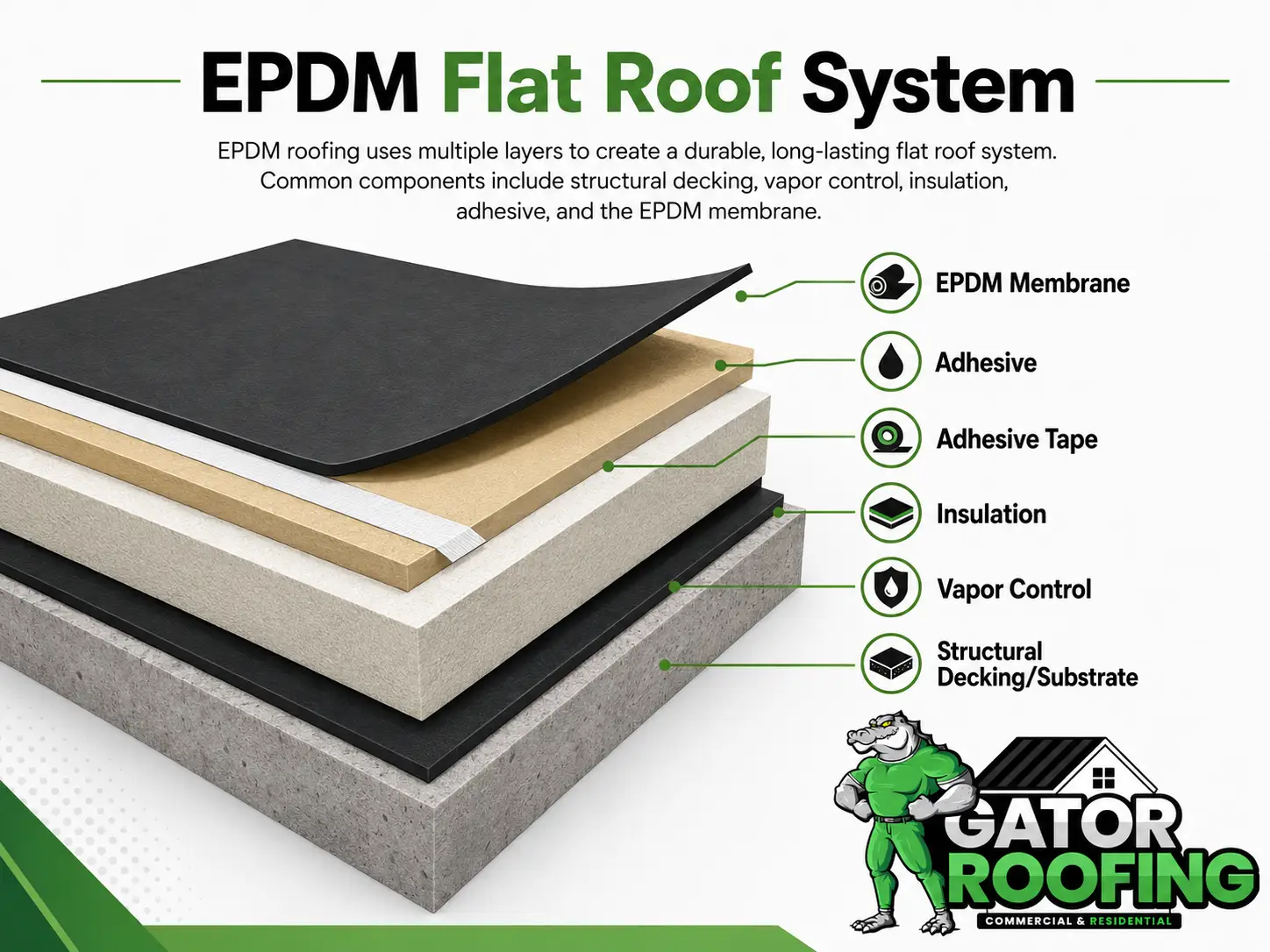
Quick Answer: What is EPDM Roofing?
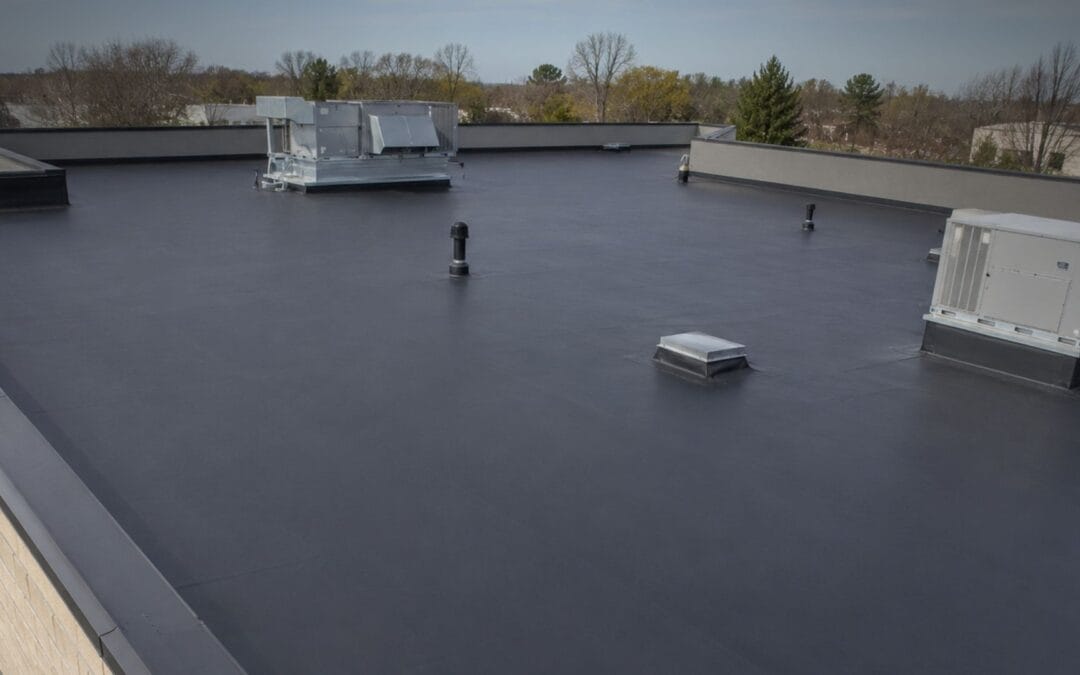
EPDM roofing is a synthetic rubber roofing membrane designed primarily for flat and low-slope roofs. EPDM stands for ethylene propylene diene monomer. The material is known for its flexibility, resistance to weather and temperature extremes, and ability to provide long-term waterproof protection.
EPDM systems can be installed using several methods, including fully adhered, mechanically attached, and ballasted applications. Because different roofs have different drainage patterns, penetrations, insulation requirements, and structural conditions, a specialized EPDM roofing solution should be designed around the property rather than treated as a one-size-fits-all system.
EPDM roofing is one of the most dependable solutions for flat and low-slope roofs. Its flexibility, weather resistance, and long service life make EPDM a practical option for commercial and residential properties that need durable protection from rain, temperature changes, and harsh weather conditions.
Why EPDM Roofing Is Popular for Flat Roofs
Flat roofs create different challenges than traditional steep-slope roofs. Water drains more slowly, rooftop equipment may create numerous penetrations, and the roofing membrane is often exposed to prolonged sunlight, standing moisture, wind, and temperature fluctuations.
This is where EPDM roofing performs particularly well.
EPDM membranes create a continuous protective surface over a roof deck. When properly designed and installed, the system helps prevent water from reaching the underlying building structure while remaining flexible enough to accommodate normal expansion and contraction.
Some of the primary advantages of EPDM roofing include:
- Strong resistance to rain and moisture
- Flexibility during changing temperatures
- Excellent performance on flat and low-slope roofs
- Resistance to ultraviolet exposure and weathering
- Compatibility with many commercial roofing applications
- Long potential service life when properly installed and maintained
- Ability to accommodate complex rooftop layouts
These characteristics have made EPDM a widely used membrane system for commercial facilities, warehouses, office buildings, retail properties, apartment buildings, and other structures with flat or low-slope roofs.
Specialized EPDM Roofing Solutions
No two flat roofs are exactly the same. A successful EPDM installation depends on understanding the building, roof deck, drainage system, insulation, rooftop equipment, and environmental conditions.
Specialized EPDM roofing solutions take these factors into account before installation begins.
1. Fully Adhered EPDM Roofing
A fully adhered EPDM system attaches the membrane directly to the underlying insulation or roof substrate using an approved bonding adhesive.
Because the membrane is secured across the roof surface, fully adhered systems can provide a smooth appearance and strong resistance to wind uplift.
This installation method is often considered for buildings where:
- Wind exposure is an important consideration
- Rooftop configurations are complex
- A clean membrane appearance is preferred
- The roof contains multiple penetrations or transitions
The exact installation requirements depend on the building structure and roofing specifications.
2. Mechanically Attached EPDM Systems
Mechanically attached EPDM roofing uses fasteners and plates to secure the membrane to the roof deck.
This installation method can be appropriate for many commercial roofing applications and may offer installation efficiencies depending on the roof configuration.
However, fastener placement, membrane seams, roof deck conditions, and wind-load requirements must all be considered during system design.
3. Ballasted EPDM Roofing
A ballasted EPDM system uses large sheets of membrane that are secured and then covered with ballast, typically stone or another approved material.
The ballast helps hold the roofing membrane in place.
Ballasted systems can work well for certain large commercial roofs, but the structure must be capable of supporting the additional weight. Drainage, parapet height, roof access, and structural capacity should therefore be evaluated before this type of system is selected.
Why Flat Roof Drainage Matters
Water management is one of the most important parts of any flat roofing system.
Although they are commonly called “flat roofs,” these roofs should still have sufficient slope to direct water toward drains, scuppers, or gutters.
Poor drainage can lead to ponding water, which places additional stress on roofing materials and increases the likelihood of problems developing over time.
When planning an EPDM roofing system, contractors should evaluate:
- Existing roof slope
- Drain locations
- Scuppers and gutters
- Low areas where water may collect
- Rooftop equipment
- Drainage paths around penetrations
The roofing membrane is only one part of the system. Proper drainage design is equally important for protecting the building.
EPDM Roofing Around Roof Penetrations
Commercial flat roofs often contain numerous penetrations, including HVAC equipment, exhaust vents, plumbing vents, electrical components, skylights, and other mechanical systems.
These areas require careful attention during installation.
Specialized EPDM flashing materials can be used around penetrations, corners, walls, curbs, and transitions to create a watertight roofing system.
Proper detailing is particularly important because many flat-roof water intrusion problems develop around transitions rather than in the center of the membrane.
Professional installation helps ensure that seams, flashing details, penetrations, and termination points work together as a complete roofing system.
How Long Does EPDM Roofing Last?
The lifespan of an EPDM roof depends on several factors, including membrane thickness, installation quality, climate, drainage, roof traffic, maintenance, and exposure conditions.
A properly installed and maintained EPDM roofing system can often provide decades of service.
However, longevity should not be evaluated based on membrane material alone.
Roof performance also depends on:
- Quality of installation
- Seam construction
- Flashing details
- Insulation
- Drainage
- Roof deck condition
- Amount of rooftop traffic
- Environmental exposure
- Routine inspections and maintenance
Choosing the correct EPDM system at the beginning of the project can significantly influence long-term roof performance.
EPDM Roofing for Commercial Buildings
EPDM roofing is particularly common in commercial construction because many commercial properties use large flat or low-slope roofs.
Examples include:
- Warehouses
- Manufacturing facilities
- Office buildings
- Retail stores
- Shopping centers
- Schools
- Multifamily buildings
- Medical facilities
- Industrial properties
For property owners and facility managers, an EPDM system can provide a practical combination of durability, flexibility, and long-term weather protection.
Large commercial roofs also benefit from EPDM’s availability in wide membrane sheets, which can reduce the number of seams required across the roof surface.
EPDM Roofing for Residential Flat Roofs
Although EPDM is frequently associated with commercial roofing, it can also be used on residential properties with low-slope sections.
Examples may include:
- Home additions
- Porches
- Garages
- Modern flat-roof homes
- Low-slope extensions
- Covered patios
These areas often cannot use conventional asphalt shingles because the roof pitch is too low.
A properly designed membrane roofing system can therefore provide a more suitable solution.
EPDM vs. Other Flat Roofing Systems
EPDM is not the only membrane used for flat roofing. Other systems include TPO and PVC.
Each material has different characteristics.
EPDM roofing is known primarily for flexibility, weather resistance, and long-term durability.
TPO roofing is a thermoplastic membrane frequently selected for commercial flat roofs and is commonly available in reflective colors.
PVC roofing is another thermoplastic membrane known for durability and resistance to certain chemicals and grease.
The best roofing system depends on the property.
Building use, roof design, climate, drainage, budget, energy goals, and rooftop equipment should all be considered before selecting a membrane.
What Should Property Owners Look for in an EPDM Roofing Contractor?
Flat roofing requires specialized knowledge.
Property owners should work with a roofing contractor who understands membrane installation, insulation, drainage, flashing, penetrations, and commercial roofing specifications.
Important factors to consider include:
- Experience installing flat roofing systems
- Knowledge of EPDM membrane requirements
- Proper flashing techniques
- Understanding of roof drainage
- Quality roofing materials
- Manufacturer-approved installation practices
- Detailed project evaluation
- Clear communication throughout the roofing project
The quality of installation can be just as important as the roofing material itself.
Specialized EPDM Roofing Solutions from Gator Roofing
A flat roof needs more than a durable membrane. It needs a complete roofing system designed around the building.
Gator Roofing provides professional roofing solutions for residential and commercial properties, including flat and low-slope roofing applications. Our team evaluates the condition and configuration of the roof, drainage requirements, insulation needs, penetrations, flashing details, and overall building requirements before recommending the appropriate roofing system.
For property owners considering EPDM roofing, professional installation is especially important. Seams, drains, edges, curbs, rooftop equipment, and transitions must all work together to create long-lasting protection.
Whether you are planning a new commercial roofing project or replacing an aging flat roof, Gator Roofing can help you understand your roofing options and determine which system is best suited for your property.
Looking for a dependable flat roofing solution? Contact Gator Roofing to discuss EPDM roofing and other specialized roofing systems for your home or commercial property.
Frequently Asked Questions
What does EPDM stand for?
EPDM stands for ethylene propylene diene monomer, a synthetic rubber material widely used in membrane roofing systems.
Is EPDM roofing good for flat roofs?
Yes. EPDM roofing is specifically suited for flat and low-slope roofs. The flexible rubber membrane creates a durable waterproof barrier and can accommodate temperature changes and normal building movement.
How long can an EPDM roof last?
A properly installed EPDM roof can provide decades of service. Actual lifespan depends on installation quality, membrane specifications, drainage, weather exposure, roof traffic, and ongoing maintenance.
Can EPDM roofing handle cold weather?
Yes. One of the advantages of EPDM is its flexibility across a wide range of temperatures. This makes the material suitable for climates that experience freezing temperatures and seasonal temperature changes.
Is EPDM roofing only for commercial buildings?
No. EPDM is commonly used for commercial flat roofs, but it can also be installed on residential low-slope areas such as garages, additions, porches, and modern flat-roof homes.
Related Articles
7 Signs You Need a New Roof
A roof rarely fails without warning. Curling shingles, granules in the gutters, sagging rooflines, and recurring leaks are all signals that your home needs a new roof, and not another temporary fix. Here’s how to read those signs before they become a bigger problem, and what a real solution looks like.